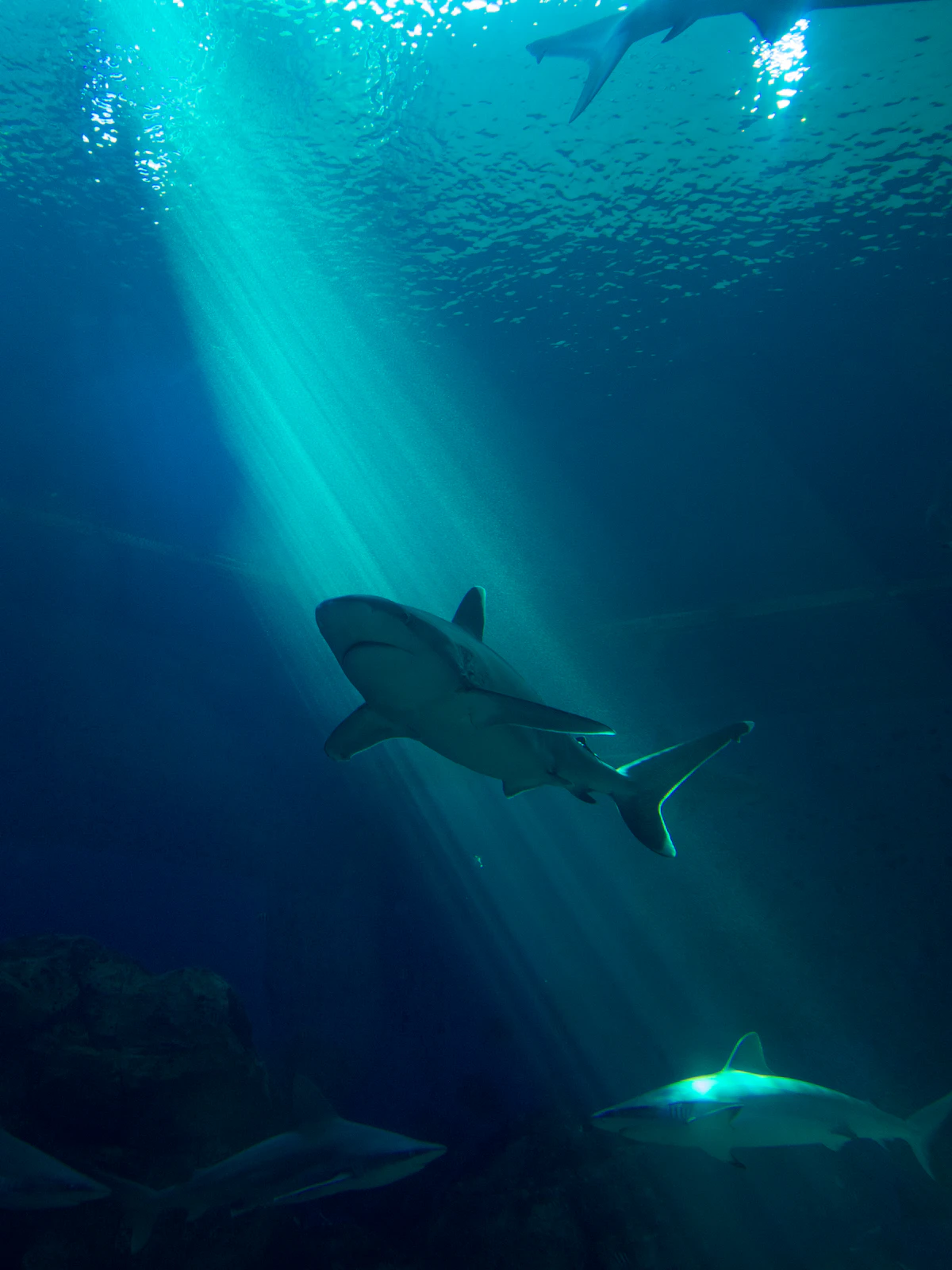
 Photo via Unsplash
When I was a kid, I was standing on the beach in Ocean City, Maryland, with my cousin when we spotted a fourteen-foot hammerhead swimming a few dozen yards offshore. I've been hooked on sharks ever since. I watched Shark Week every summer and read every article and listened to every podcast I could find. I was never scared of them. I just wanted to understand them.
About two years ago, people kept telling me you could use AI to learn about anything. I thought about what I actually wanted to learn, and it was sharks. I'd always been into business and the economy too, so I started writing a book on the economics of the shark industry. Two problems kept showing up in my research. Sharks were taking fishermen's catch, and fishermen were blaming the sharks. And fishermen were catching sharks by accident and killing them. Fishing kills about 80 million sharks a year, and a lot of them are caught by accident while boats are fishing for something else. Oceanic sharks and rays have declined 71% since 1970, mostly because of fishing. Now populations are starting to rebound, and we need to find a way to keep it that way.
Right now, captains have one option when sharks show up: move to another spot. By then they've already lost fish, burned fuel and lost time. They can only react, because nobody can tell them where the sharks will be before they get there.
I don't think the sharks are the problem. They're doing what they've always done.
But every time a shark takes a fish off a line, it tells you where that shark was at that moment, and almost nobody records it. If every charter boat logged those moments every day, you'd have a live map of where sharks actually are, built by the people who are already on the water. With that map, captains could plan their day around the sharks instead of reacting to them. Fewer lost fish for the captain, and fewer sharks hooked and killed.
Sharks are where we're starting, because losing fish to sharks is a clear reason for a captain to open the app every morning. What we're really building is a cheaper and more detailed way to track how marine life moves. NOAA's shark survey samples a few hundred stations a year. Our charter captains could log that many reports in a week.
That's useful to a lot of people besides captains.
Season and zone decisions are made today with limited survey data. A daily map that accounts for how many boats fished each area gives them a better starting point.
Encounter data tied to real fishing effort, updated every day, across a whole coastline.
Bycatch and discards cost real money. A forecast that helps boats avoid both is worth paying for.
The same forecast, for the same reason captains want it: keep more of what you catch.
The same reports and the same model can expand to dolphins, sea lions, seals and sea turtles next, and later to fleets outside the U.S. We're already training the model on the data we have.
I think this is a problem AI can actually help solve. Not by fighting sharks, but by telling people on the water where the sharks are early enough to fish somewhere else. That's better for the captain and better for the shark, and it's rare that those two things line up. I don't want to waste it.